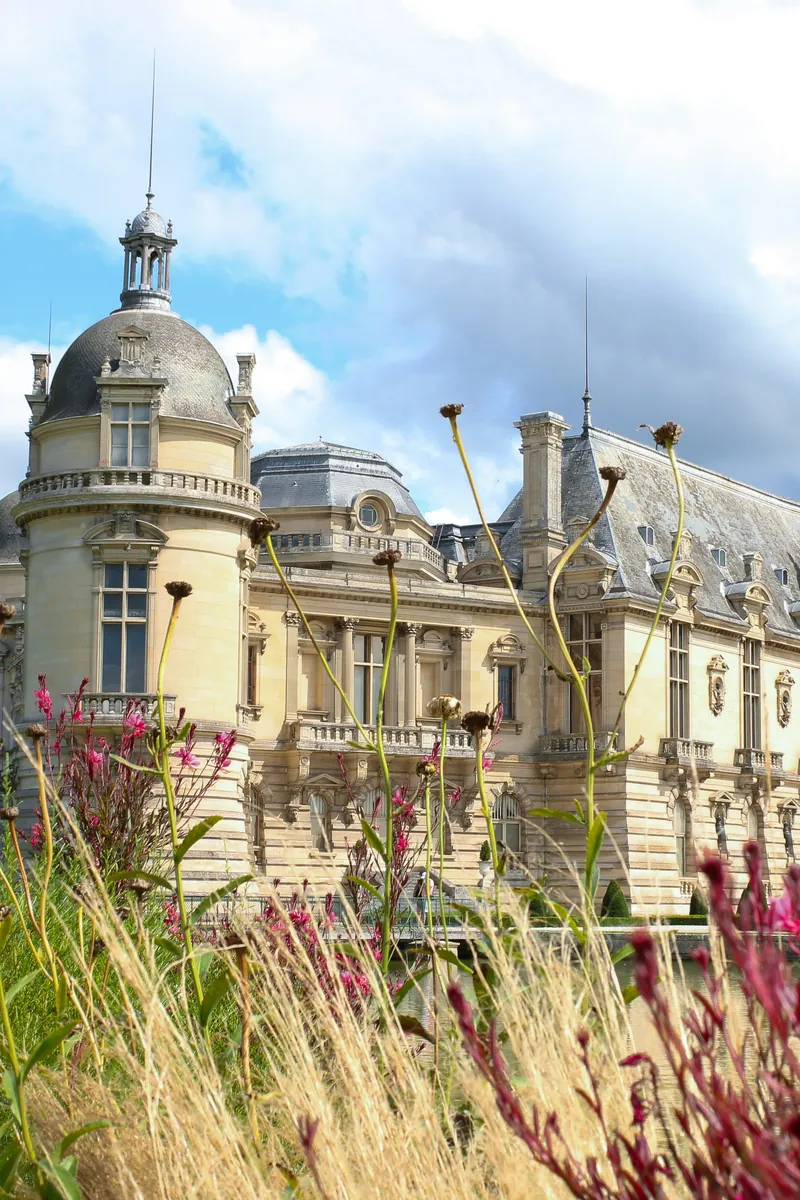
Chantilly is the grand country domaine of the princes of Condé, set in the forests of the Oise about 40 kilometres north of Paris — a château ringed by water, a princely art collection of the first rank, monumental stables built for a man who believed he would be reborn as a horse, and gardens laid out by the same hand that shaped Versailles. Where so many French châteaux are admired for their architecture alone, Chantilly is admired above all for what it holds: the Musée Condé, whose paintings, drawings and manuscripts make it, by common reckoning, the second-richest collection of old masters in France after the Louvre.
The estate owes its modern form to Henri d'Orléans, Duc d'Aumale — son of King Louis-Philippe — who rebuilt the château in the 19th century and spent a lifetime assembling its collection. On his death in 1897 he bequeathed the whole domaine to the nation, on one extraordinary condition: that the works be kept exactly as he had hung them, never sold, never lent, never rehung. The result is a museum frozen in the taste of its creator — around 800 paintings displayed cheek by jowl in the dense 19th-century manner, including works by Raphael, Poussin, Ingres and Delacroix, and, in the Cabinet des Livres, the celebrated medieval book of hours known as the Très Riches Heures du Duc de Berry. Because of the duke's will, these masterpieces can be seen nowhere else on earth.
Beyond the galleries, Chantilly is a full day in the open air. The Grandes Écuries — the Great Stables — are among the most magnificent stable buildings in Europe, raised in the 18th century on a princely scale and now home to the Living Museum of the Horse, with its equestrian demonstrations under a soaring dome. The park, designed by André Le Nôtre, unfolds in formal parterres, a long Grand Canal and quieter corners like the Anglo-Chinese hamlet that inspired Marie-Antoinette's at Versailles. And it was here that Chantilly cream — crème Chantilly — earned its name, a sweet footnote to a princely estate that is a listed historic monument and one of the great houses of France. The château is entered on a timed slot; the rest of the estate is yours for the day.